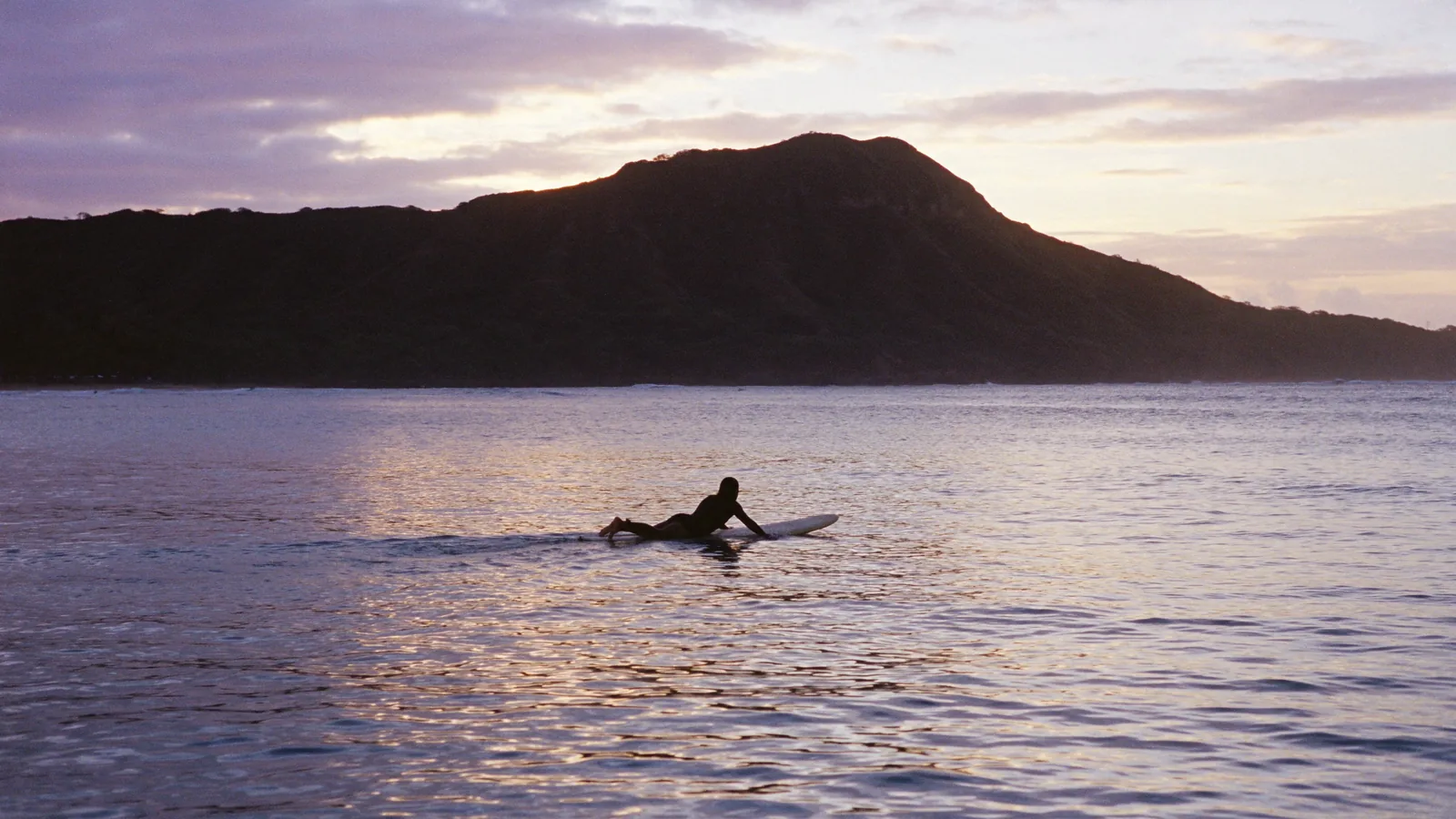
Before surf shops, before surf films, before surfing was an Olympic sport, Hawaiians were riding waves. The practice is called heʻe nalu — wave sliding — and it was never just recreation.
A practice with rules
In pre-contact Hawaiʻi, surfing was woven into ceremony, status, and education. Chiefs surfed on particular breaks and on boards made from specific woods. Commoners surfed too, but the size of the board and the choice of wave reflected rank.
The ocean was understood as a living system. Reading swell, tide, and wind was part of a broader literacy that included fishing, navigation, and farming. A surfer who could not read the water was not a surfer.
Boards were built, not bought
Traditional boards were shaped from koa, ʻulu, and wiliwili wood, then finished with kukui nut oil. A long board could take days of labor. The board was personal in a way that a foam board is not, and it was cared for accordingly.
The arrival of the missionaries
In the 1820s, American missionaries arrived in Hawaiʻi and discouraged many Hawaiian practices, surfing among them. By the late nineteenth century, the number of Hawaiians surfing had fallen sharply. The practice did not disappear — it survived in places like Waikīkī, where a community of beach boys kept it alive.
Duke Kahanamoku and the revival
Duke Paoa Kahinu Mokoe Hulikohola Kahanamoku, born in Honolulu in 1890, became the most famous surfer in the world. An Olympic swimming champion, he travelled widely and demonstrated surfing in California and Australia, seeding the sport globally.
Duke is the reason a bronze statue of a surfer stands at Kūhiō Beach today, arms wide, facing the water. Our meeting point is a short walk from it.
What this means in a lesson
We do not treat Hawaiian surfing history as trivia. It is the reason we teach the way we do:
- The ocean is not a playground. It has rules, and you learn them before you paddle out.
- Respect is part of technique. Give other surfers room, wait your turn, do not drop in.
- The board is a tool, not a trophy. Take care of it and it will take care of you.
- Surfing is a practice. Progress comes from repetition, not from one good day.
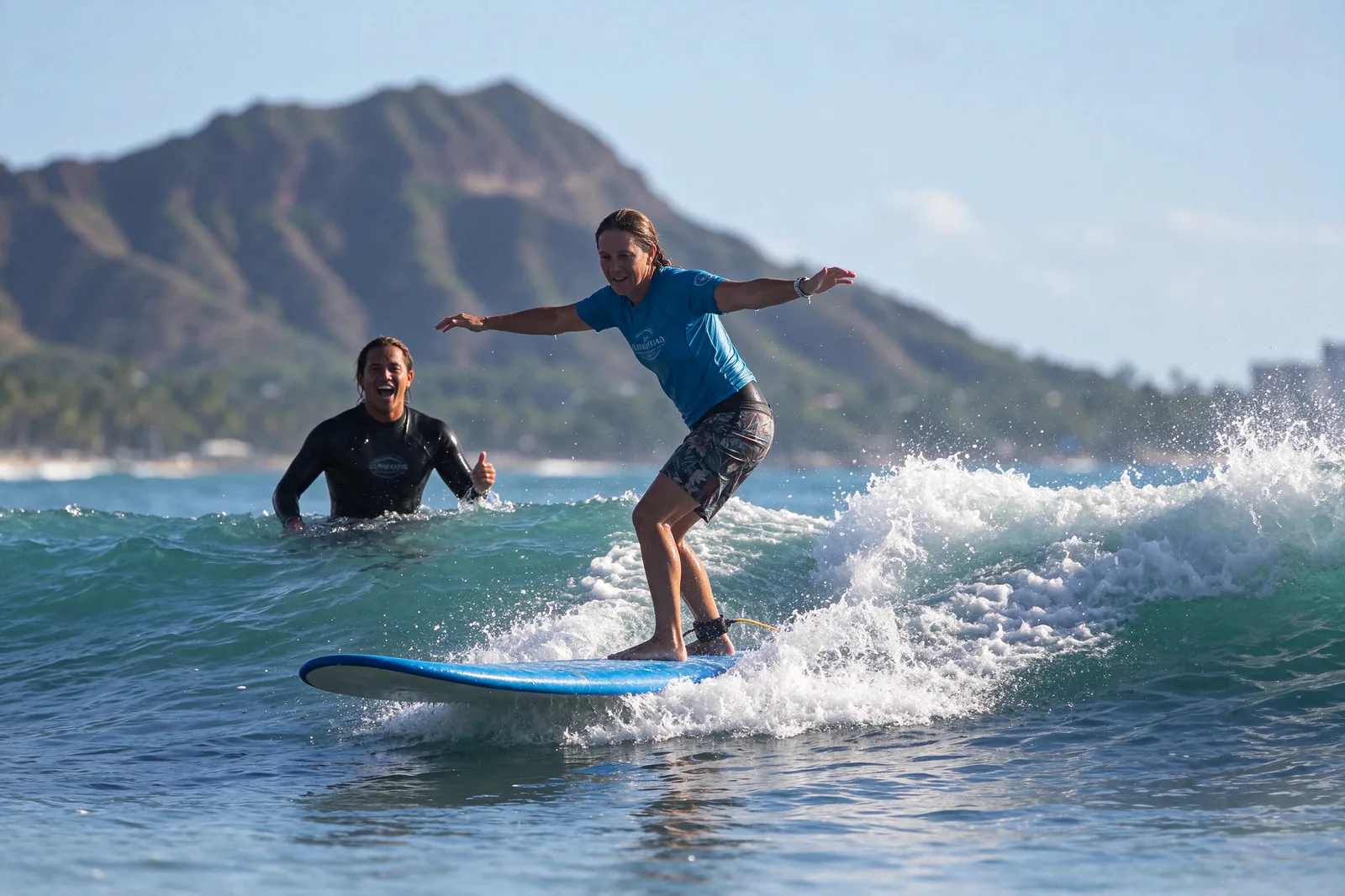
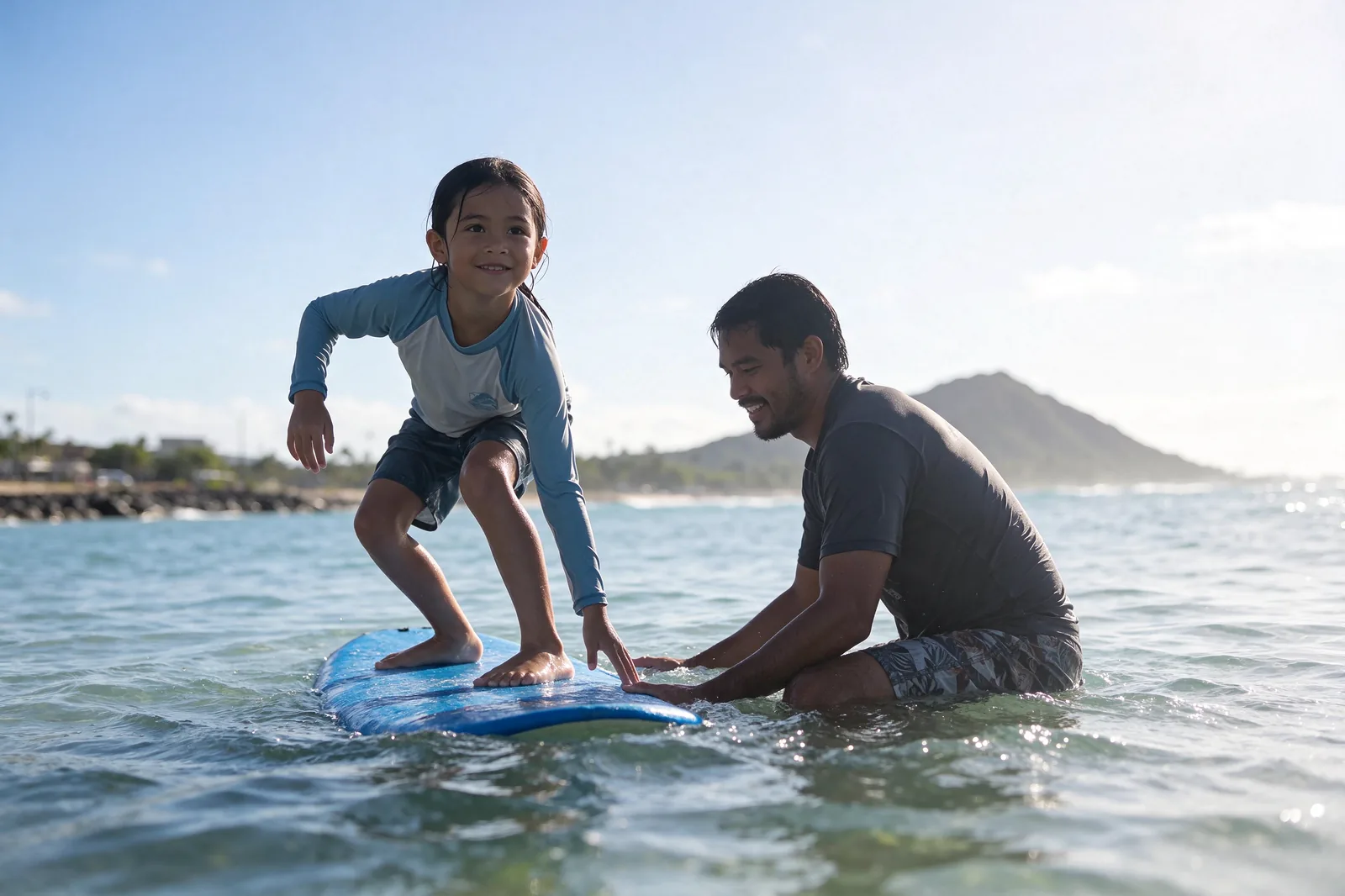
When you take a lesson with us, you are learning a Hawaiian practice from Hawaiian instructors. That is a responsibility we take seriously — and it is why we tell the stories, not just the technique.