Every keiki lesson starts the same way: a child standing on the sand, looking at the water, deciding whether this was a good idea. Some run straight in. Most do not. Both are fine.
Why children get nervous
The ocean is loud, it moves, and it is bigger than anything else a child has met. A wave that looks playful from the beach looks different when it is at your waist. That is not a character flaw — it is good instinct.
The mistake adults make is treating nerves as something to argue with. "It's fine, don't worry" does not work on a seven-year-old. What works is shrinking the unknown until it is small enough to step into.
Start smaller than you think
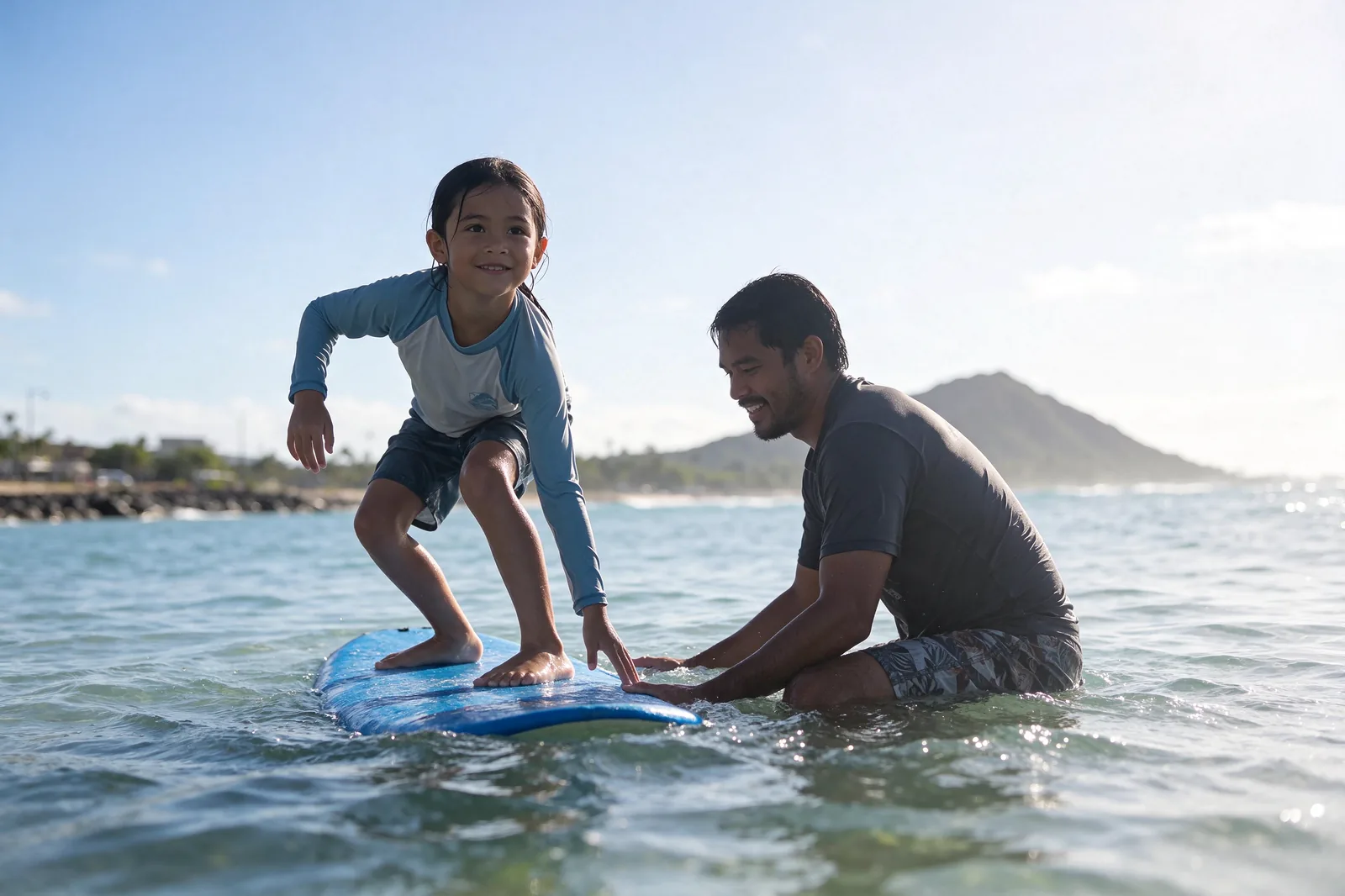
In a keiki lesson, the first step is not surfing. It is standing in ankle-deep water with the instructor and the board, watching a wave go past. The next step is sitting on the board on the sand. Then kneeling on it in the shallows. Then lying on it while the instructor holds it steady.
By the time a child is actually paddling, they have already done five things that felt slightly brave. Confidence is built from that stack, not from a pep talk.
Breathing, and the power of a reset
We teach keiki a simple reset: stop, stand tall in the water, take one slow breath in through the nose, let it out through the mouth. It sounds too simple to matter. It works because it interrupts the spiral.
If a child gets knocked over by a wave, the reset comes first, then the laugh, then back on the board. The lesson we want them to leave with is not "the ocean is safe" — it is "I can handle it when it surprises me."
Celebrate the boring wins
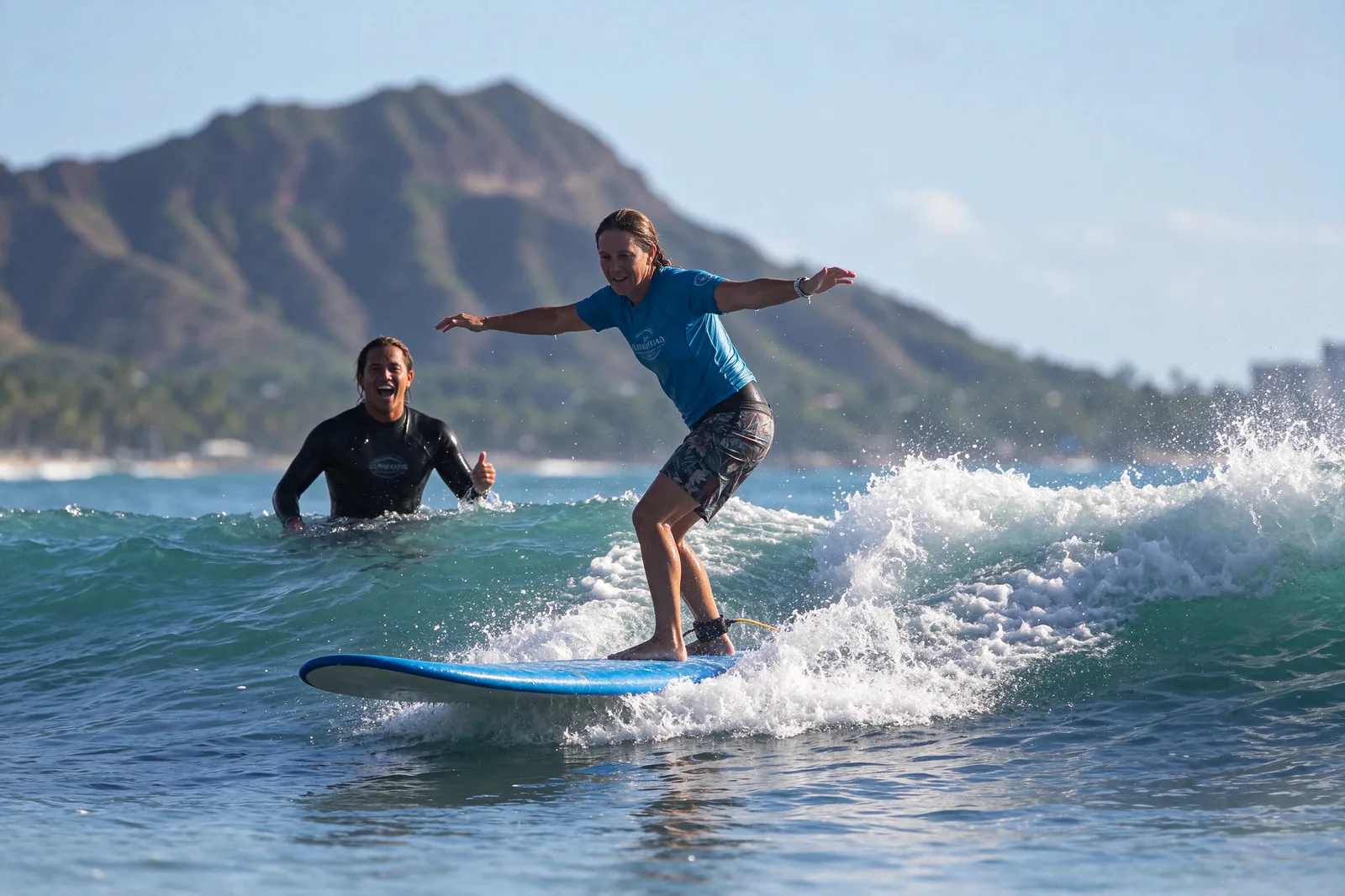
Standing up is not the only success. Paddling three strokes without help is a win. Getting back on the board alone is a win. Letting go of the instructor's hand for two seconds is a win.
Parents on the beach are part of this. Cheer for the attempt, not just the ride. The child who hears "you got right back on" learns something more useful than the child who only hears "good job standing."
Finding the right surf buddy
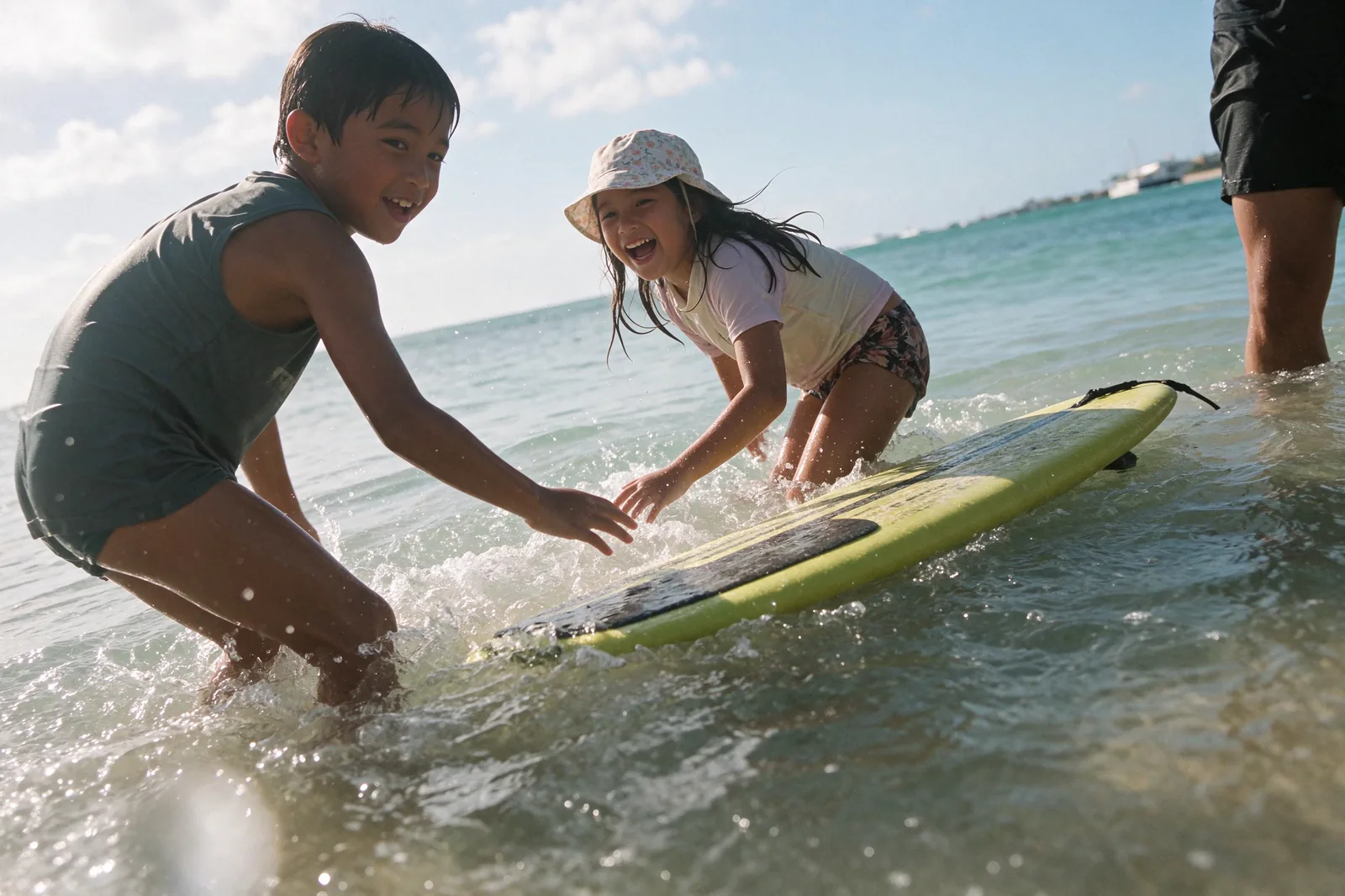
Children learn faster next to another child. If your keiki has a sibling or a friend close in age, book lessons back to back so they can watch each other. The competition is friendly and the fear is shared.
What we ask of parents
Stay where your child can see you. Keep siblings on the sand. Let the instructor run the lesson — if your child looks nervous, we will slow down, not speed up. And trust the shorter session: a 30-minute lesson that ends in laughter beats a 60-minute lesson that ends in tears.
The ocean is a big classroom. We just make the first door small enough to walk through.