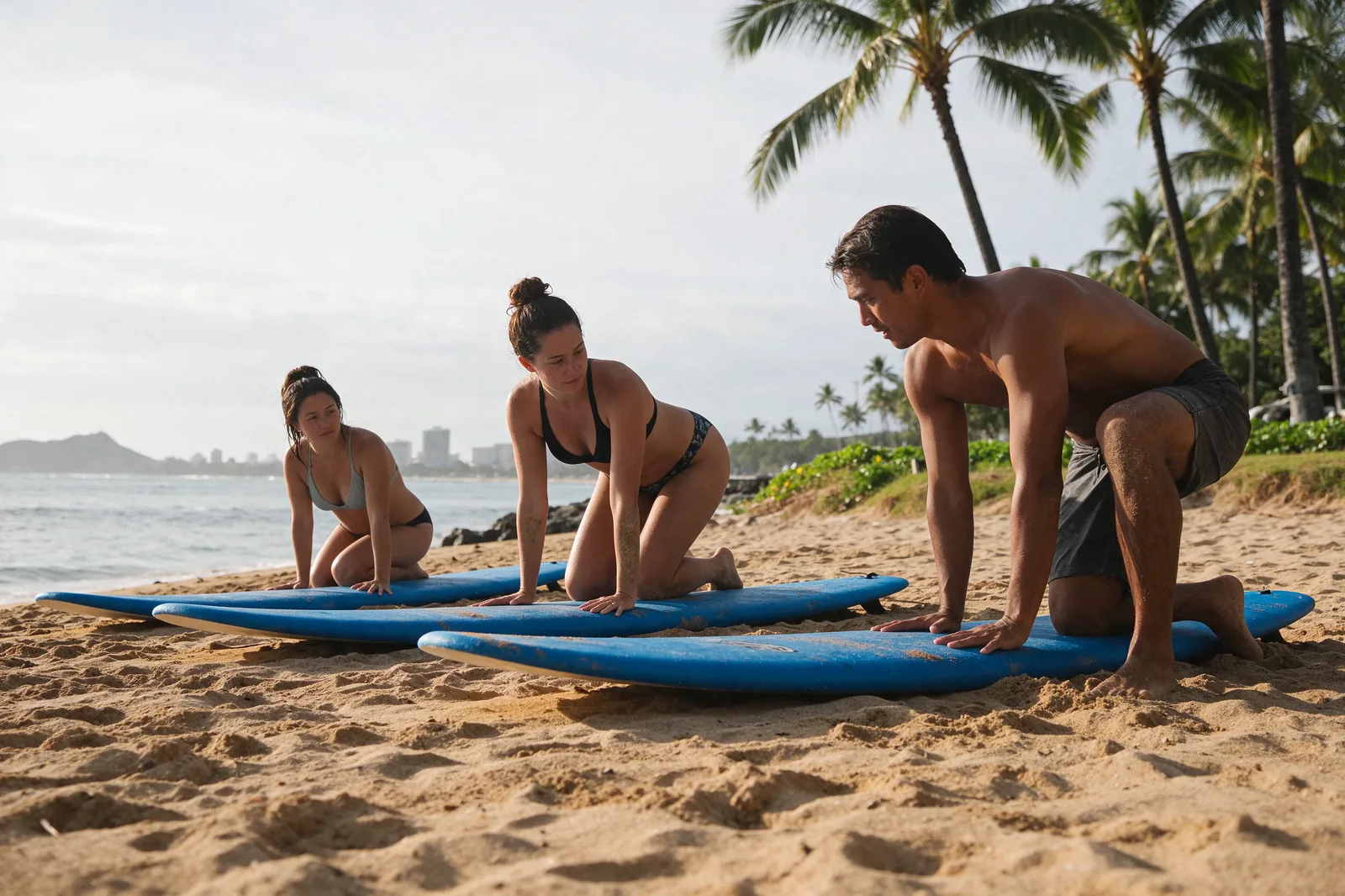
Surfing looks like standing. It is actually four skills stacked on top of each other, and every one of them can be practiced on the beach. This is the progression we use in every lesson.
1. Board positioning
Where you lie on the board determines everything that follows. Too far back and the nose rides high, the board pushes water, and you never catch the wave. Too far forward and the nose digs in.
The reference point: your belly button should sit at the center of the board, with the nose about a hand's width above the water when you are lying flat. Your instructor will adjust you the first few times until you can feel it.
2. Paddling
Paddling is the engine, and most beginners under-paddle. Two habits matter:
- Reach forward. Start the stroke with your hand near the nose, not beside your ribs.
- Pull deep and finish. The power is in the pull under the board, not the recovery above it.
- Chin up, chest open. Looking down collapses your shoulders and shortens the stroke.
For a Waikiki longboard, three or four committed strokes are usually enough to get into a gentle inside wave. The board does most of the work once it is moving.
3. The pop-up
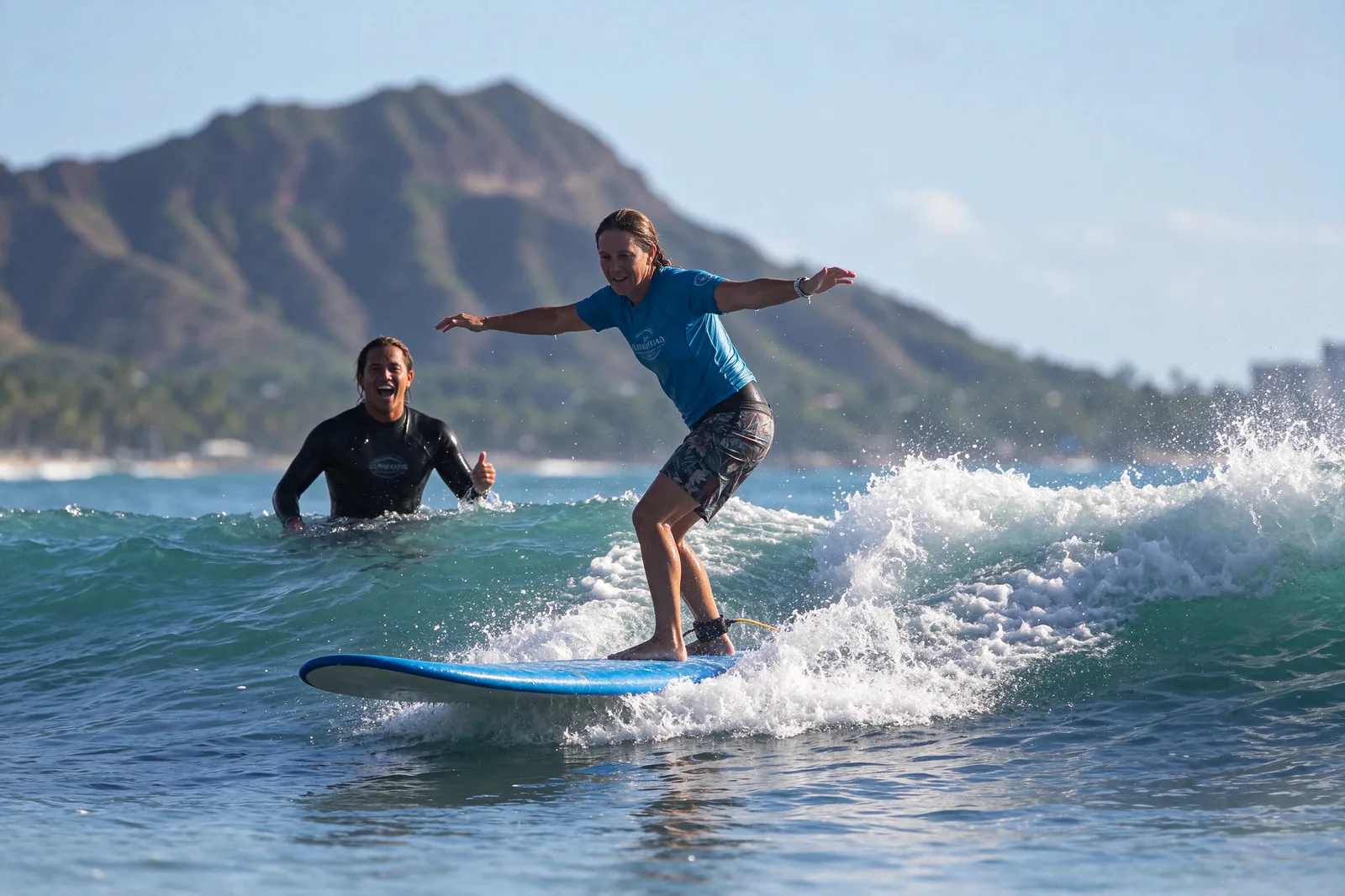
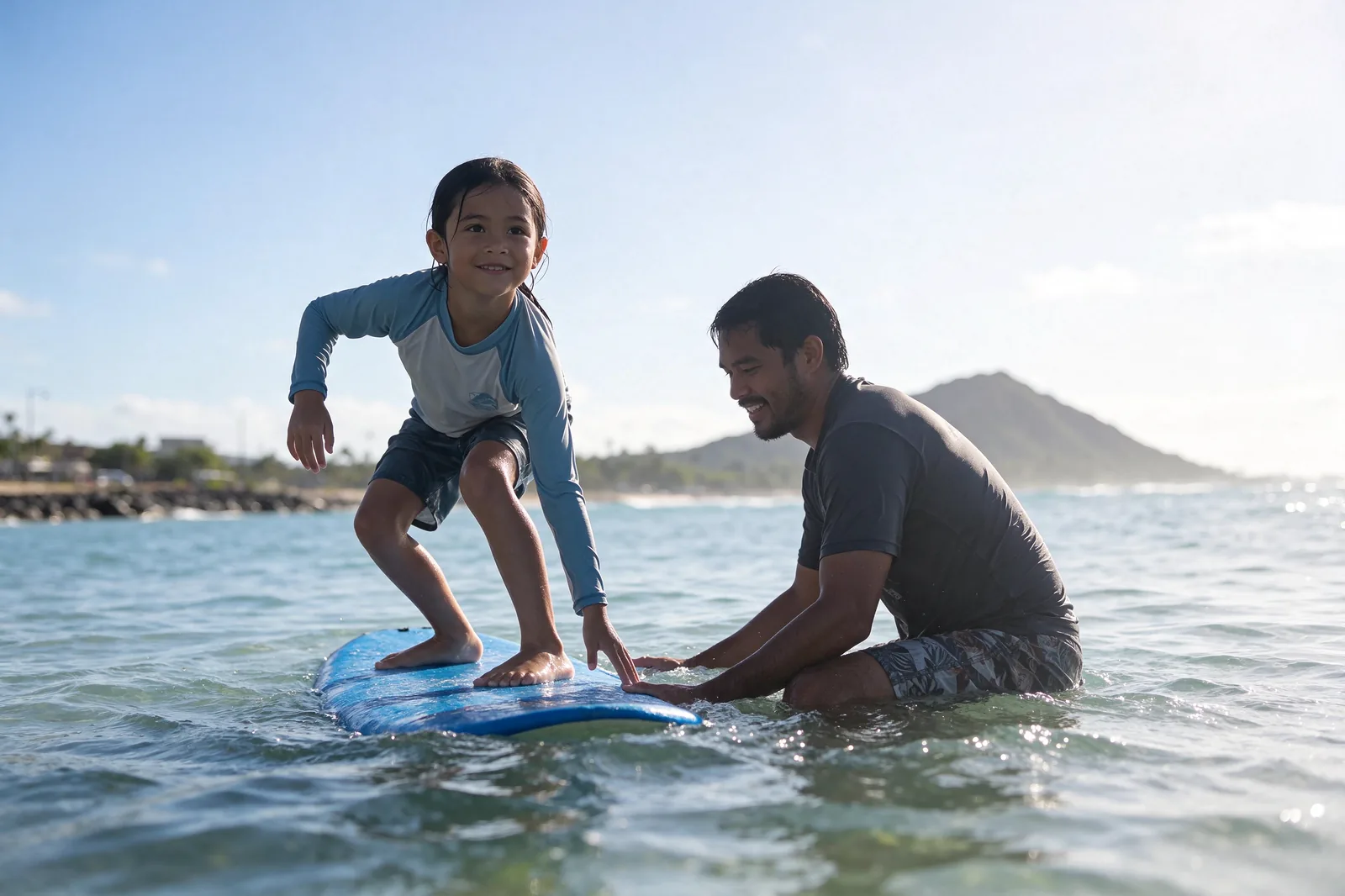
The pop-up is one motion, not two. Hands plant under your chest, you push your torso up, your back foot lands under your hips, your front foot follows, and you are standing — knees bent, weight centered, arms out.
The most common mistake is standing up straight like a soldier. That puts your weight over the nose and the board shoots out from under you. Stay low. Stay bent.
Practice it on the sand until it is boring. Boring is the goal — you want the motion to happen without thinking while the wave is moving under you.
4. Stance
On a longboard, stand slightly sideways with your feet about shoulder-width apart. Your front foot points toward the nose, your back foot is more across the board. Knees soft. Eyes on the beach, not your feet.
Where you look is where you go. Look at the sand and you will end up on the sand. Look down the line and the board follows.
Practice on land first
Ten minutes of sand practice saves an hour of frustration in the water. That is why every Hawaiian Boy lesson starts on the beach at Kūhiō, not in the waves.
What comes after the fundamentals
Once you can stand and ride straight to the beach, the next skills are turning, trimming, and reading which wave is worth paddling for. Those are the skills a two-hour lesson is built around — and the reason a second lesson is usually better than the first.