Search "kid-friendly surf lessons near me" and you will find a hundred listings that all promise the same thing: fun, safety, memories. The differences that matter are harder to see from a search results page. Here is what to look for, and what a good lesson actually builds.
Surfing is a confidence machine
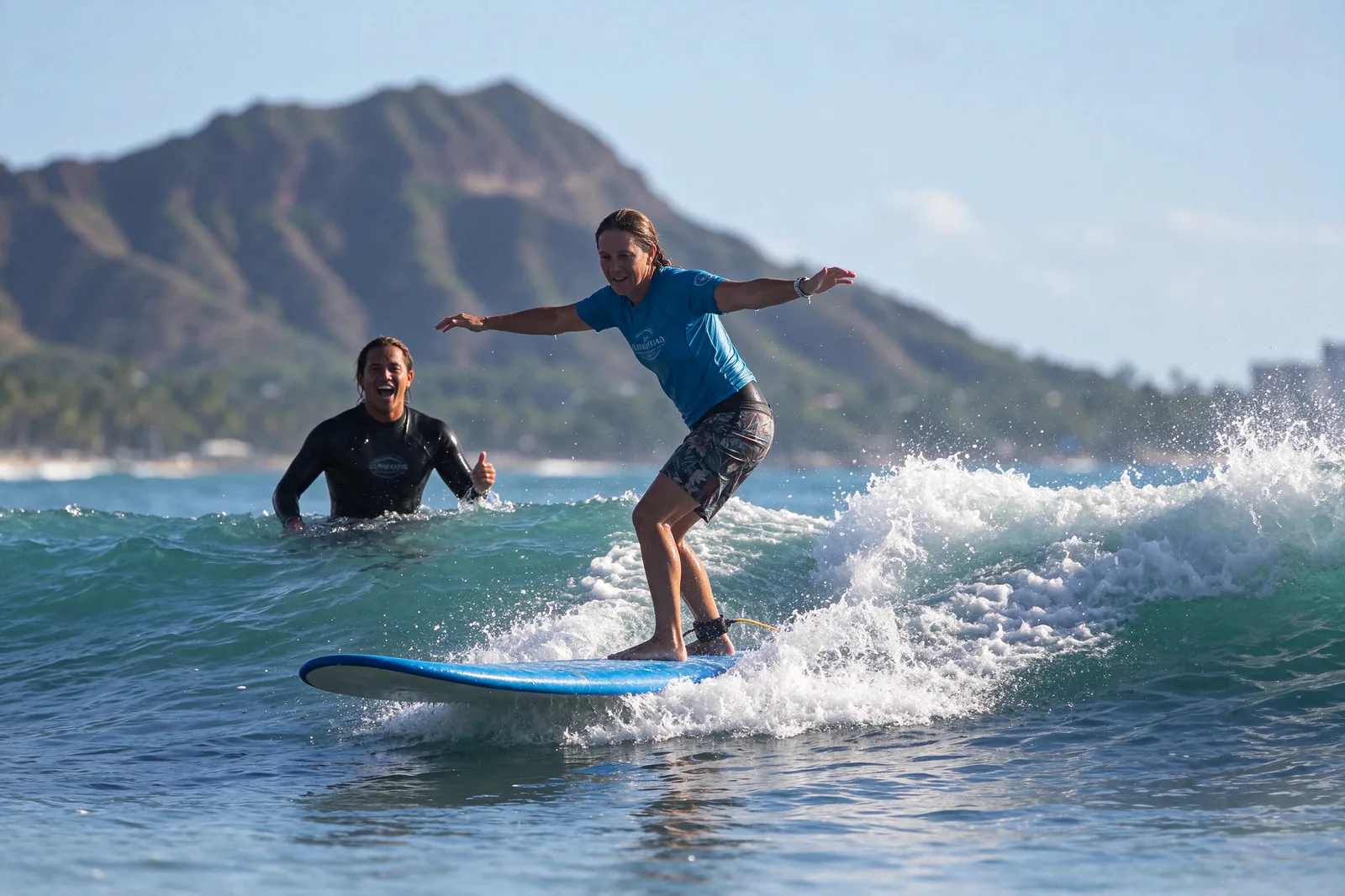
A wave is a problem with a deadline. A child has to read it, commit, balance, and recover — usually in under ten seconds. Do that twenty times in a morning and something shifts. Not just in the water.
The confidence children build in a surf lesson is specific and earned. It comes from doing a hard thing badly, then slightly less badly, then well.
Skill development happens in layers
- Balance and coordination. Standing on a moving surface trains the whole body, especially the small stabilizing muscles in the feet and core.
- Water reading. Children learn to watch sets, spot the gap, and understand that the ocean has a rhythm.
- Paddling endurance. Short bursts of effort with rest between them — the natural interval training of the sea.
- Recovery. Falling, coming up, finding the board, getting back on. This is the skill most children practice without noticing.
Overcoming fear, one rep at a time
The first fall is the pivot point. A child who falls, comes up, and gets back on the board has learned that falling is survivable. That lesson transfers to school, to sports, to friendships.
Instructors help by naming it out loud: "You fell, you got back up, that is what surfers do." Praise the recovery, not just the ride.
Building social skills in the lineup
Group lessons put children next to strangers in a shared, slightly unpredictable environment. They learn to wait their turn, to cheer for someone else's wave, and to share space. It is social skills practice disguised as a beach morning.
The role of positive reinforcement
Children respond to specificity. "Good job" is pleasant but forgettable. "You kept your eyes up that time and stayed on your feet longer" tells a child exactly what to repeat.
Ask your child's instructor what to praise on the drive home. It makes the lesson last longer than the hour.
How to choose the right lesson
- One instructor per child for ages 3 to 12. Group lessons are for ages 12 and up.
- Shallow water and a sand bottom. Ask where the lesson actually happens, not just which beach.
- Certified instructors. Lifeguard, CPR and First Aid certification should be stated plainly, not implied.
- A stated lesson length. For young children, 30 to 60 minutes is the right window. Longer is not better.
- A meeting point you can find. A named landmark beats "on the beach."
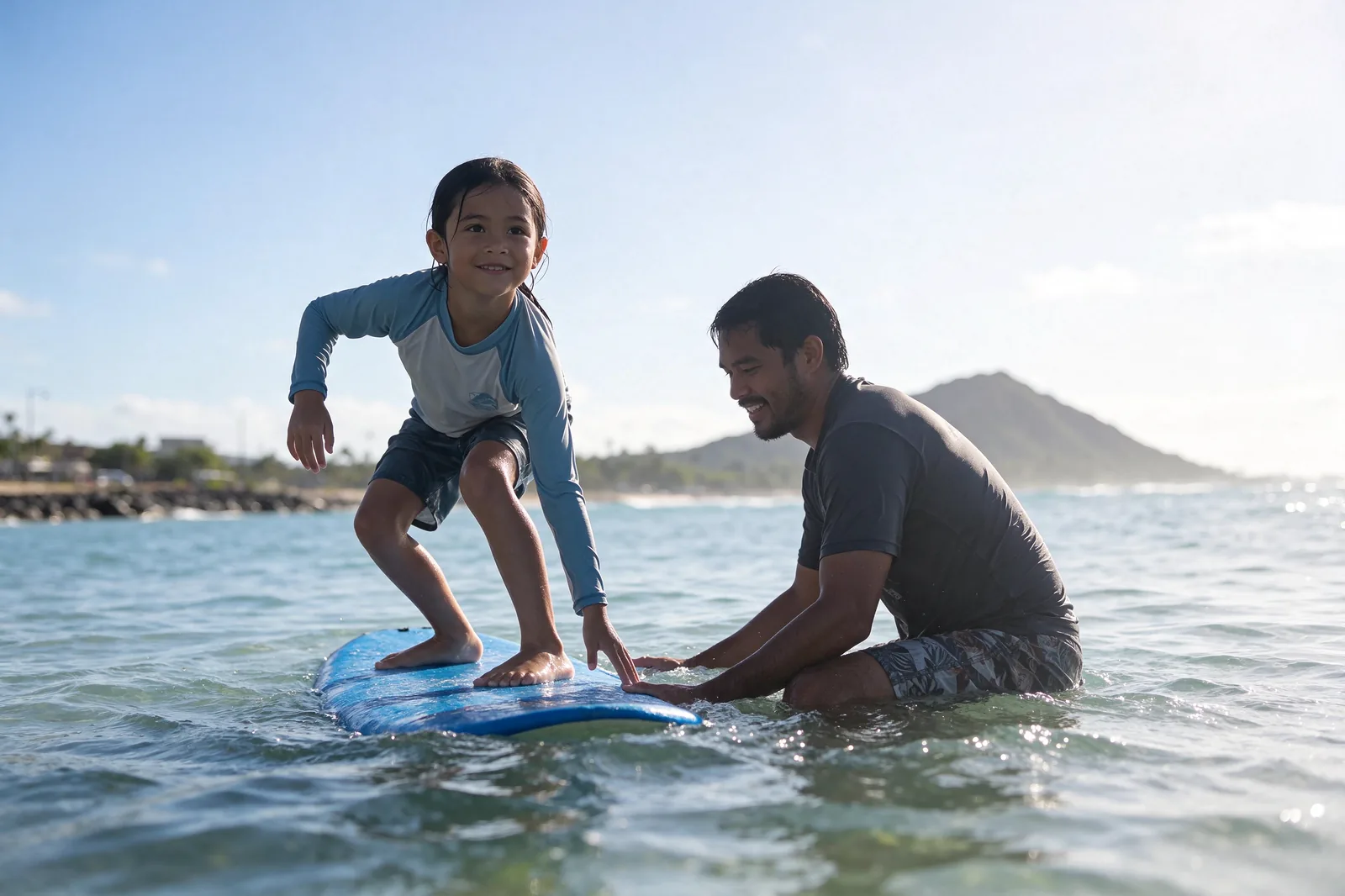
At Kūhiō Beach, our keiki lessons run 30 to 60 minutes with one instructor per child, in shallow water, with the parent on the sand in sight the whole time.
Riding a wave of confidence
The ride home matters as much as the ride. Ask questions that invite a story: "What was the funniest fall?" "Which wave was the best one?" The memory is what your child will carry — and it is usually the reason they ask to come back.