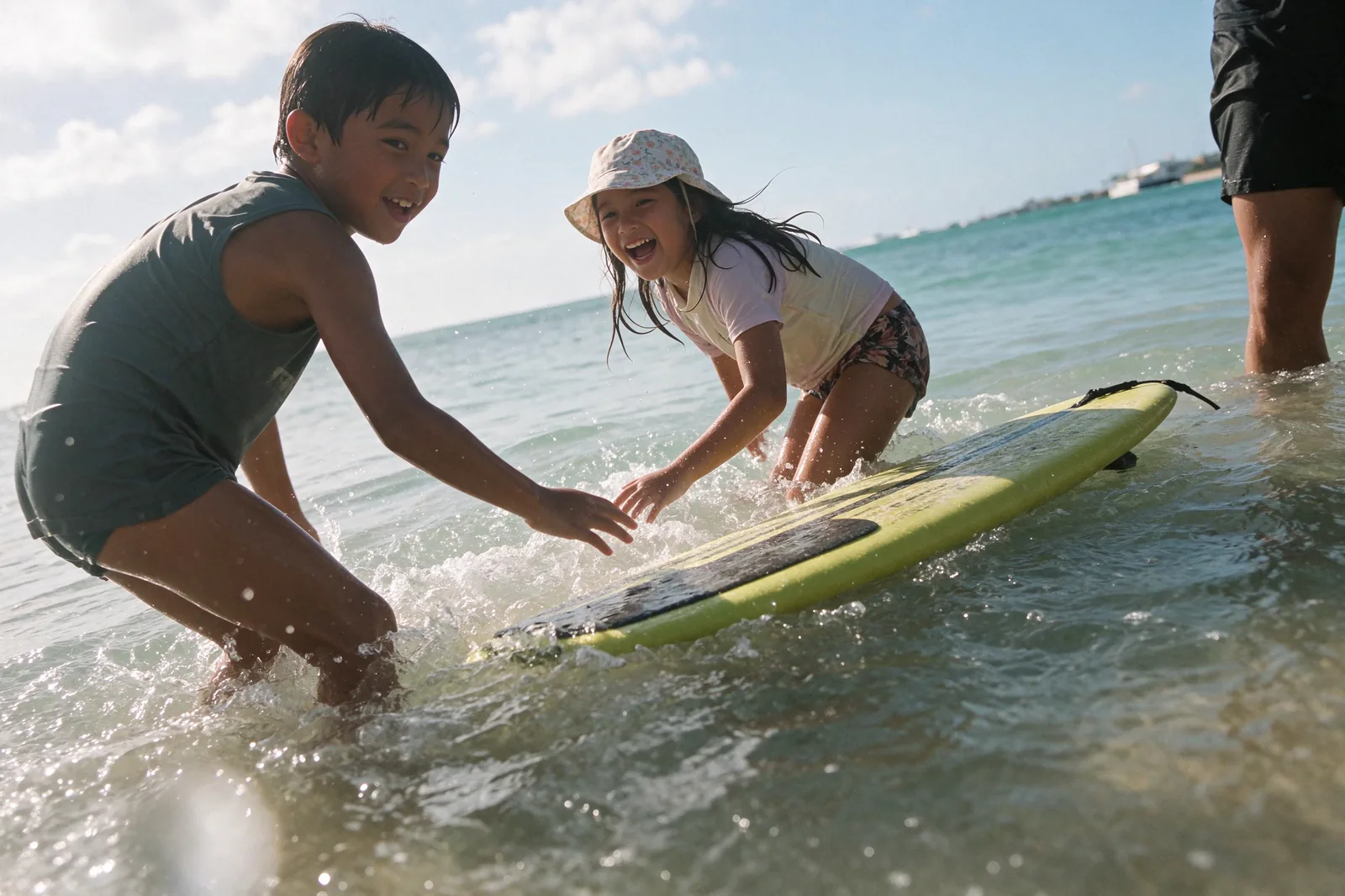
Ask a child what they remember about a surf lesson and you rarely get technique. You get the splash, the instructor's nickname, the wave that got away, and the moment they stood up.
That is the real product. Here is what we do to protect it.
We make the first five minutes fun
Before any instruction, there is a game. Balance on the board on the sand. Jump off. Try again. The point is to turn the board from a strange object into a toy.
A child who has laughed on the board on the sand is a different child in the water.
We keep instructions short
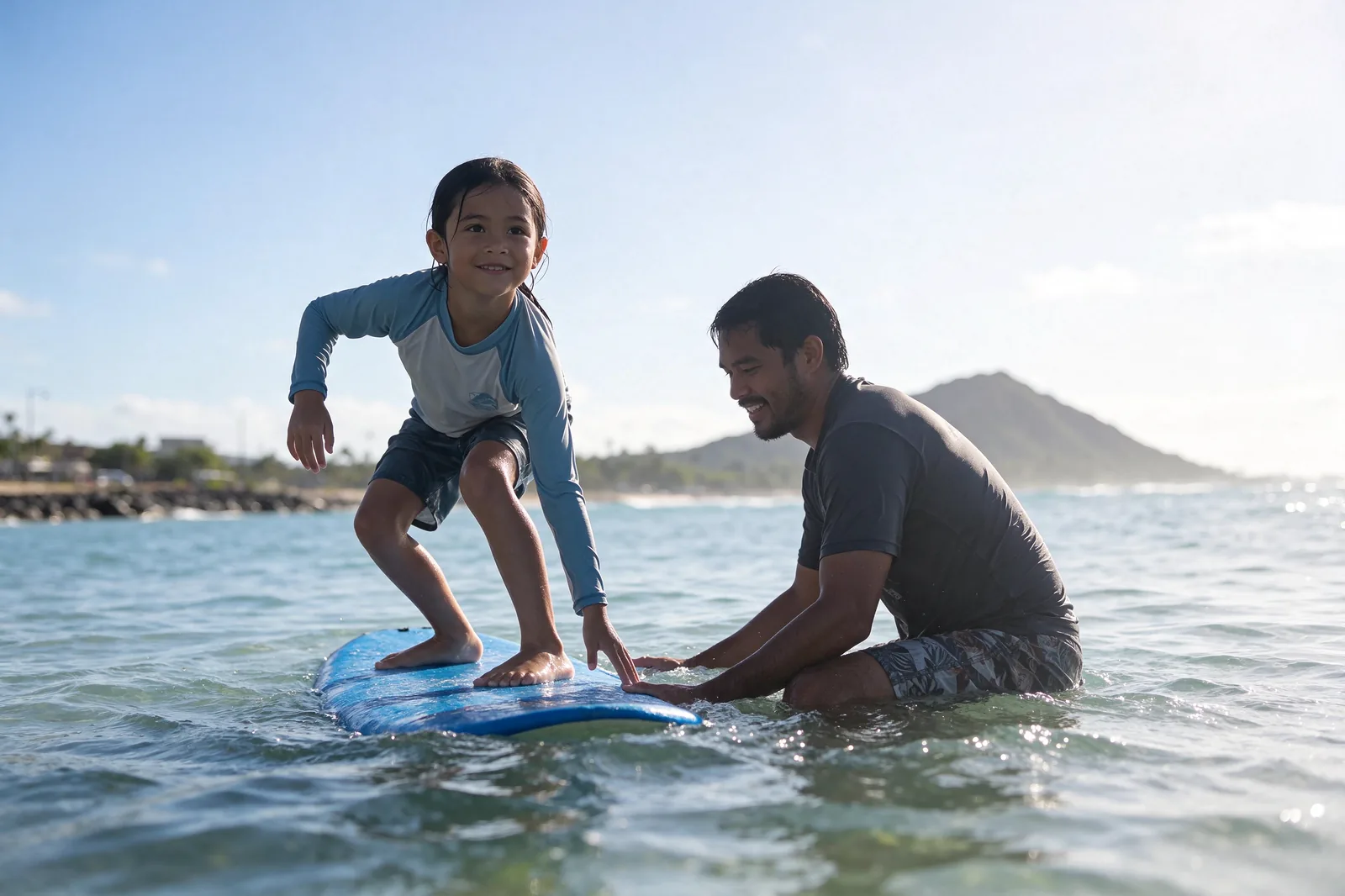
A seven-year-old can hold about one instruction at a time. "Paddle" is an instruction. "Paddle, then when you feel the wave lift put your hands under your chest and push up while keeping your eyes on the beach" is a lecture.
We give one cue per wave. The rest is repetition.
We let them fall
Not recklessly — but a child who is never allowed to tip over never learns to recover. The falls in shallow water at Kūhiō are gentle. The recovery is the lesson.
We cheer for the attempt
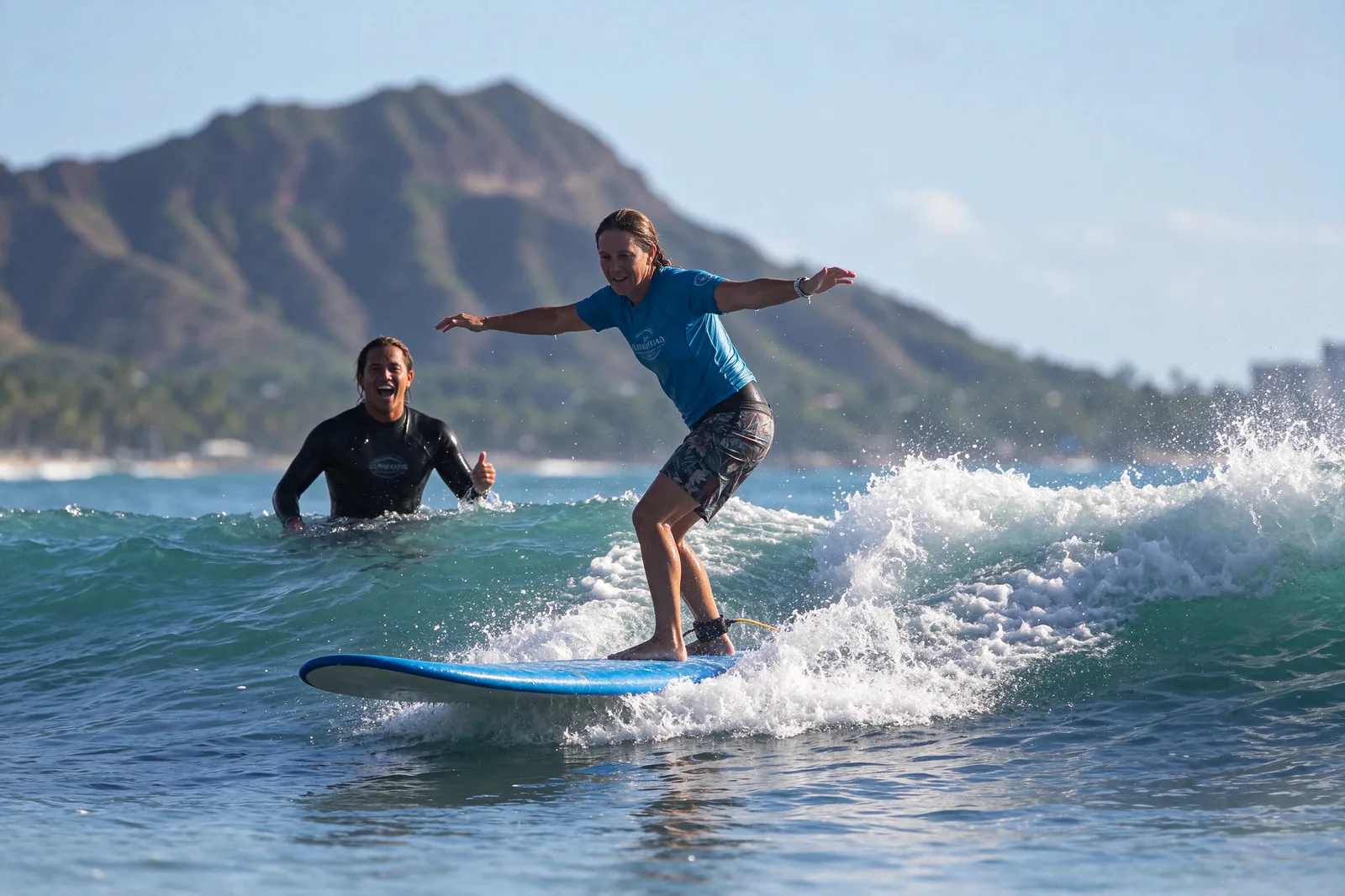
The instructor's voice is a big part of the experience. Children remember being cheered for. They also remember being corrected constantly. We aim for a ratio of about five celebrations to one correction.
We end while it is still fun
The best keiki lesson ends with a child who wants more. If your child is tired, cold, or overwhelmed, we stop. A short lesson that ends in laughter gets you a second lesson. A long one that ends in tears does not.
What parents tell us
The pattern we hear most: "They were terrified for ten minutes and then they would not come out of the water." That is the normal arc. The fear is real, and it is temporary. Our job is to make the ten minutes as gentle as possible.
Come see for yourself
Keiki lessons run daily at the Kūhiō Beach Hula Mound, for children ages 3 to 12, with one instructor per child. Bring a swimsuit, a towel, and reef-safe sunscreen. We will bring the board and the patience.