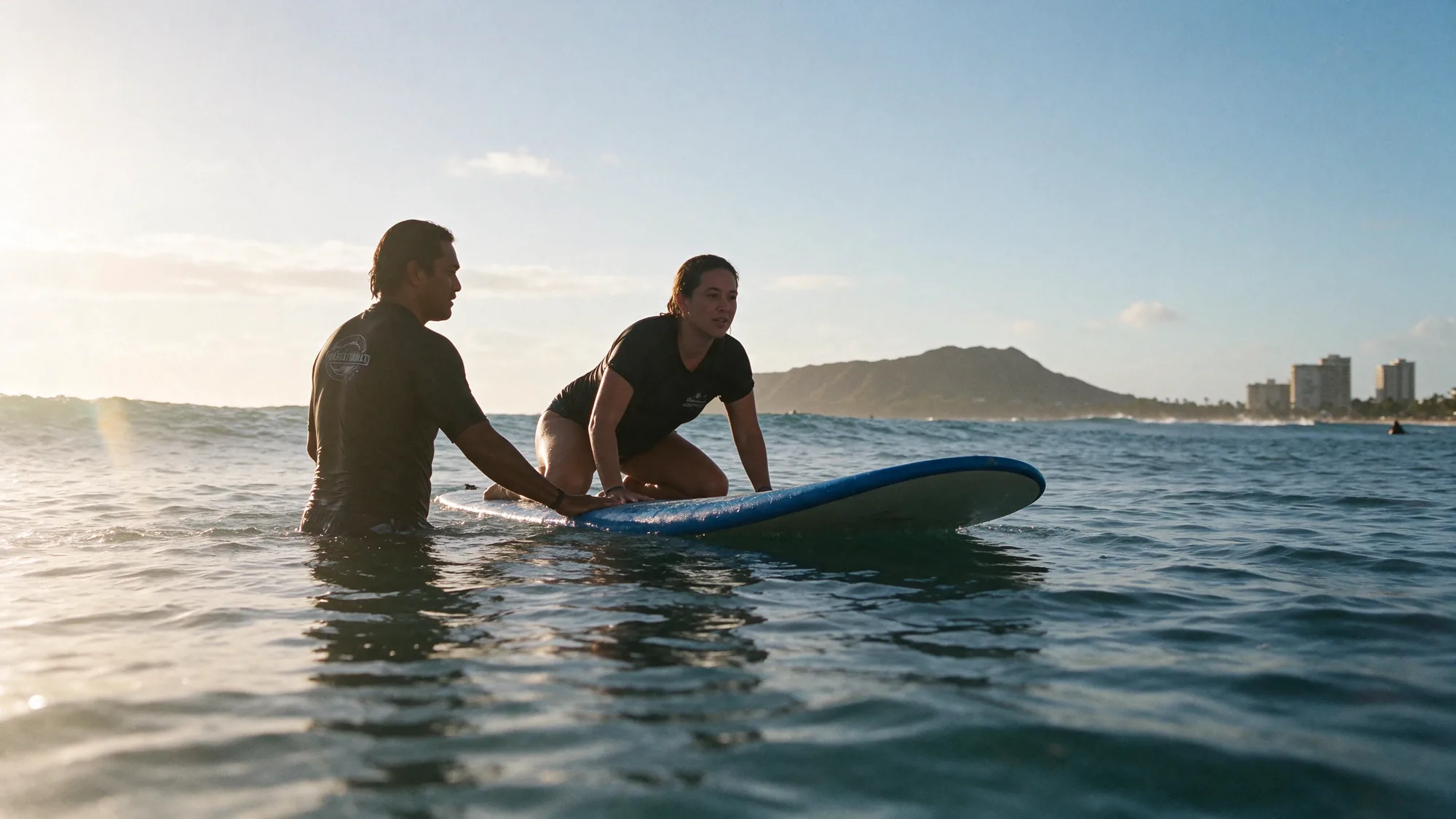
Every surf school says it is safe. Very few tell you what that means in practice. Here is what to check before you book a beginner lesson anywhere — including ours.
Certification you can name
Our instructors are certified by the American Red Cross in Lifeguard, CPR and First Aid. That is not marketing language; it is a specific set of skills that includes water rescue, spinal precautions, and emergency response.
Ask any school which certifying body stands behind its instructors. If the answer is vague, keep looking.
A ratio you can count
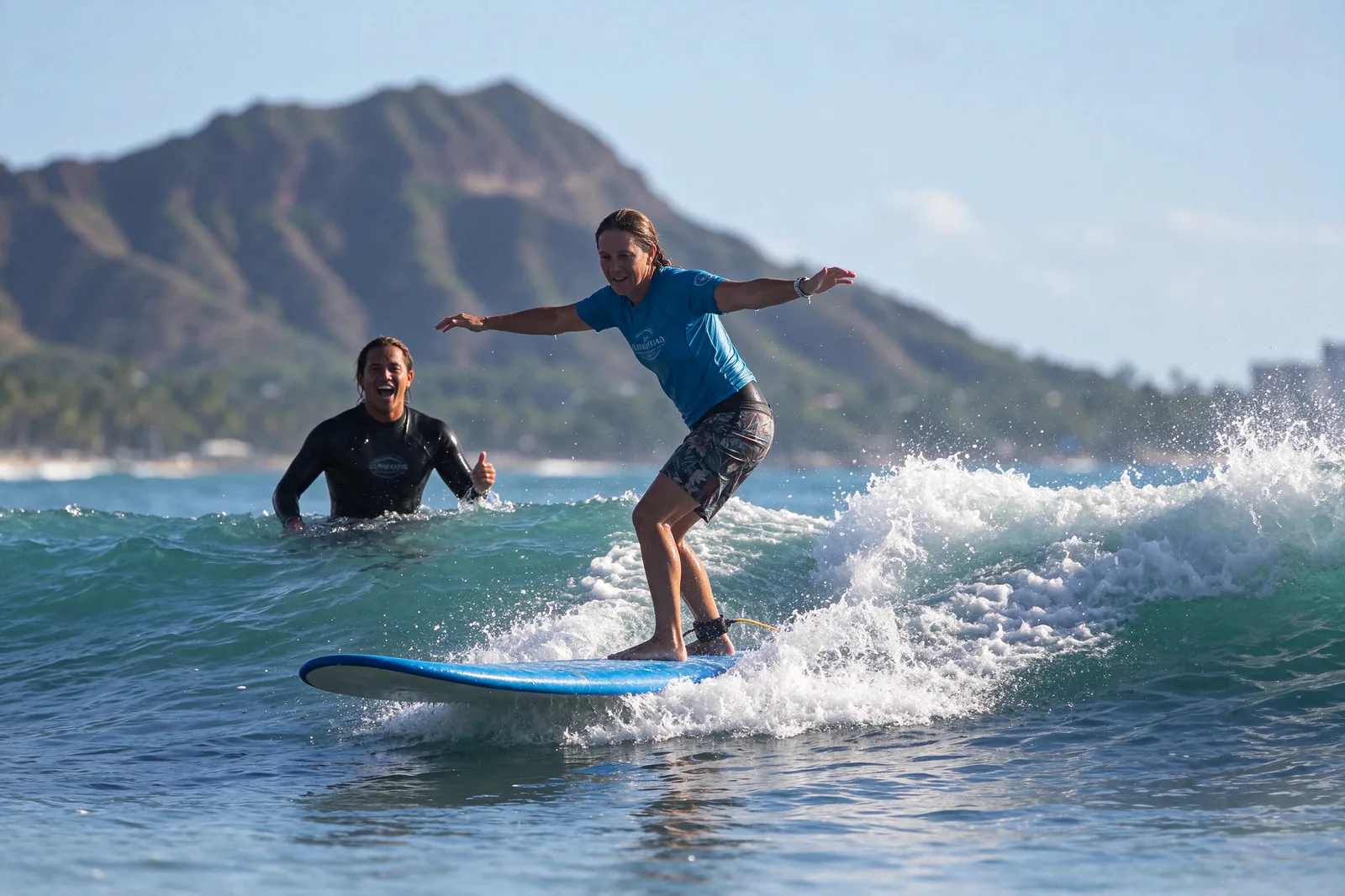
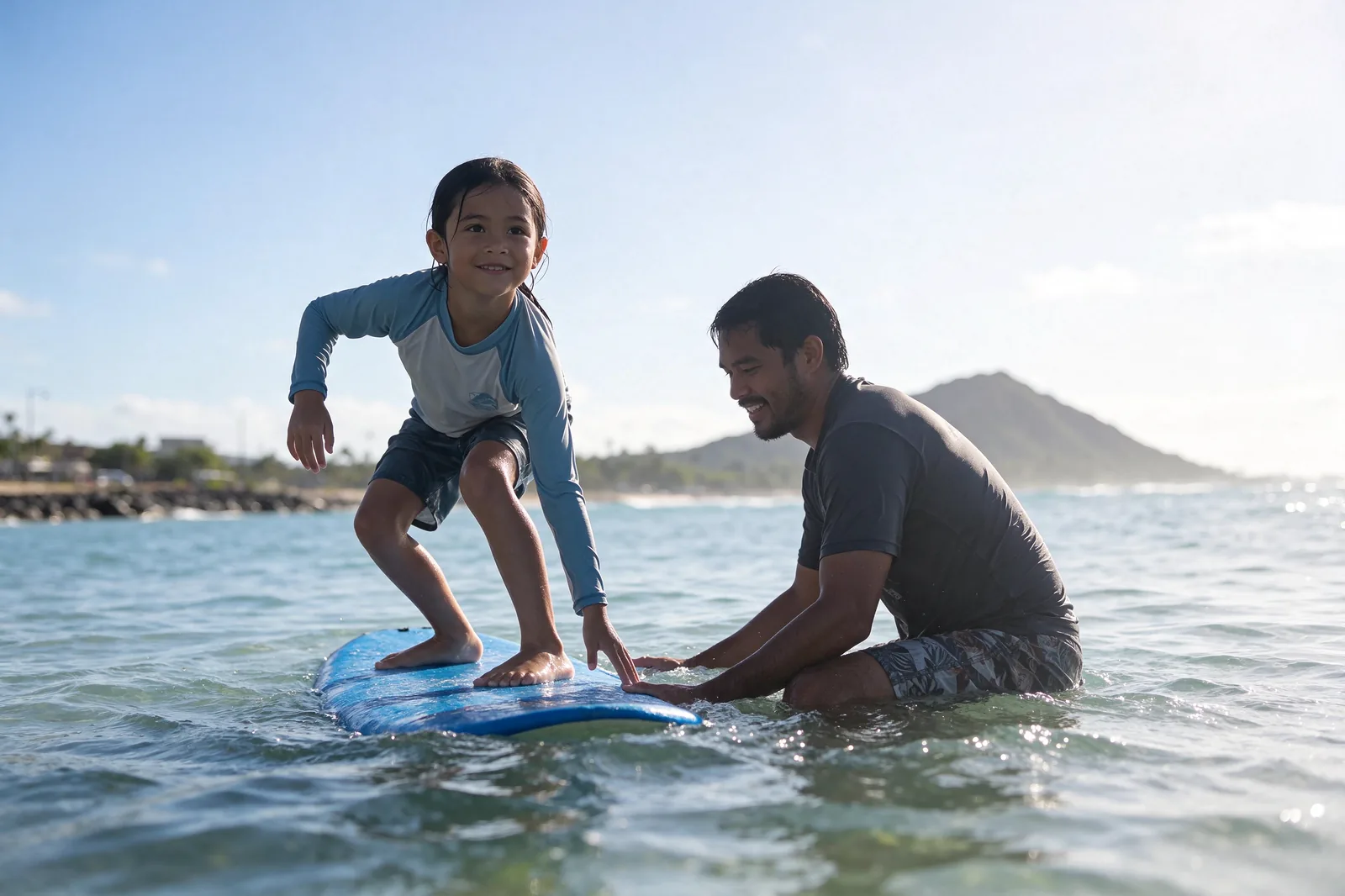
How many students per instructor? A group of eight beginners with one instructor is a supervised swim, not a lesson. We keep it to one student per instructor for private lessons, two for semi-private, and four for group lessons — with children always one-on-one.
A board that floats
Beginners should learn on a soft-top longboard. It is buoyant, forgiving, and it does not have a sharp rail or fin waiting for a shin. Every lesson at Hawaiian Boy includes a soft-top board and leash.
Water you can stand in
Ask where the lesson actually happens. At Kūhiō Beach the inside break is shallow with a sand bottom, which means a beginner can stand up between waves. That single detail does more for safety than any promise on a website.
A briefing before the water
Every lesson starts on the sand: where to lie, how to paddle, how to fall, and what to do if you get separated from your board. If a school walks you straight into the water, ask why.
The questions to ask
- Who certifies your instructors, and in what?
- What is the student-to-instructor ratio?
- What kind of board will I use?
- How deep is the water where we start?
- What happens if conditions change?
A good school answers all five without hesitation.
Experience the difference
If you have never surfed, book a one-hour private lesson. You will get one instructor, one board, and a briefing built around your comfort level. If you are bringing a child, book a keiki lesson so they get the same attention in shallower water.